
No Justification in International Law for the US Detention of President Nicolás Maduro or the Attacks on Venezuela
This article was translated using artificial intelligence and the original language of the article is Arabic.
By: Head of the International Law Programme at Chatham House
This may be the moment Western Europe realizes that the United States has abandoned the core values that have unified them over the past century.
Executive Summary
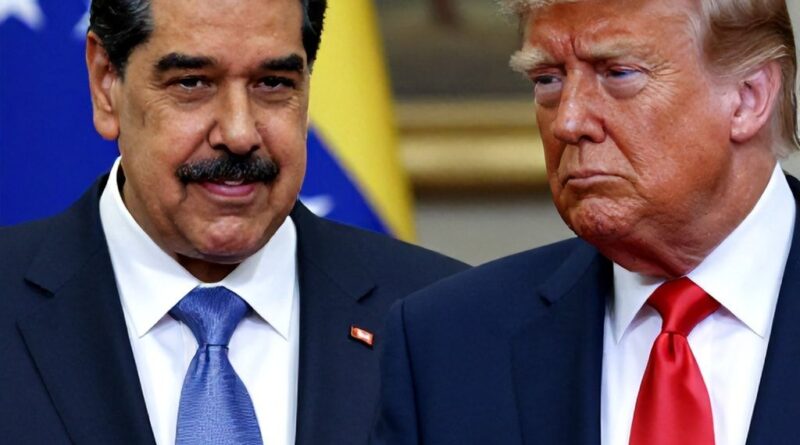
The detention of Venezuelan President Nicolás Maduro and his wife by US forces operating within Venezuela, and his forcible rendition to the United States for prosecution, represents a profound challenge to international law.
While the United States characterized the operation as a judicial “snatch mission” executed by law enforcement with military support, it was, in reality, a full-scale military operation. This included strikes on military targets in and around the capital, Caracas, and the forcible abduction of the Venezuelan president by US Special Forces. These actions undoubtedly constitute a flagrant violation of Venezuelan sovereignty and the United Nations Charter.
It is difficult to conceive of any plausible legal justification for Maduro’s transfer to the US or for the initiation of these attacks. There was no authorization from the UN Security Council for the use of force. Furthermore, this was clearly not an act of US self-defense in response to a prior or ongoing armed attack by Venezuela.
The White House maintains that it is defending the American people from the devastating consequences of illegal drug importation by “narco-terrorists”—consequences it likens to an armed attack against the United States. However, under international law, only a kinetic assault using military or similar means constitutes grounds for the exercise of self-defense.
Regarding the state of democracy in Venezuela, the US alleges that Maduro “stole” the 2024 presidential election, asserting that opposition candidate Edmundo González Urrutia is the rightful winner, and further claims that Venezuelan authorities rigged the 2025 parliamentary election results. While these allegations remain contested, there is little doubt that the electoral process was marred by grave flaws.
In 1948, the UN Universal Declaration of Human Rights first articulated the principle that the authority of a government must be based on the will of its people. Nevertheless, this episode broadly undermines international confidence in the principle—agreed upon following the horrors of the 20th century’s world wars—that states may not enforce their legal or political demands through the use of force.
Some may view the Caracas operation through the lens of Russian helicopters flying over Kyiv on February 24, 2022, seeking to topple a government and transform Ukraine into a client state. While the analogy is imperfect, President Trump’s assertion that the US has a right to “control” its immediate neighborhood mirrors Vladimir Putin’s claim that Russia has the right to forcefully consolidate its security interests in its “near abroad.”
The UN Secretary-General has noted that the rules of international law were not observed in this instance, describing it as a “dangerous precedent.”
Conclusion
According to this analysis, the US operation in Venezuela is legally unjustifiable. it establishes a perilous precedent in international relations, placing international law and the principle of state sovereignty under unprecedented strain.